
Fort Lauderdale Directory Shelves
Fort Lauderdale directory research has three firm starting points: an onsite local database, a statewide reference collection, and a digitized federal item. None is a verified, unbroken year run. The local research found no official shelf list that names every Fort Lauderdale Polk or R.L. Polk edition or the final print year. Ask the holding desk for a year-by-year inventory instead of assuming that a missing year was published.
| Directory collection | Verified span | Repository | Reader access |
|---|---|---|---|
| Fort Lauderdale white and yellow pages | January 1941 to February 1947 | Library of Congress | Free online, 884 page images and downloads |
| Florida directories by city | Early 1900s to present statewide scope; local subset varies | State Library of Florida Collection | Catalog search and onsite reference |
| Searchable city-directory database | Fort Lauderdale and Broward coverage; exact years not posted | Broward Main Library, fifth floor | Onsite electronic database; call the desk |
| BCL Digital Archives | Local memory from the late nineteenth century forward | Broward County Library | Free keyword and collection browse |
| Digital Sanborn Maps | Local editions where held; exact years require catalog check | BCL and NSU licensed resources | BCL card plus NSU e-card route |
| Historical archives | Family, school, county, oral-history and photo collections | Main Library Special Collections and AARLCC | Finding aids, digital access, or appointment |
The collection table separates a verified local date from a broad statewide scope. That distinction is crucial. A catalog that holds Florida directories into the present does not prove a Fort Lauderdale volume exists for each year.
Fort Lauderdale Telephone Books
The most immediate remote source is the Library of Congress telephone-directory item, titled for Fort Lauderdale white and yellow pages from January 1941 through February 1947. Its 884 sequential images can be browsed or downloaded. Alphabetical white pages show a surname or organization, initials or given name, street address, and telephone exchange and number. Yellow pages arrange trades and firms and often preserve advertisements.
A telephone book is not the same thing as a conventional Polk volume. It may omit people without a listed telephone and often supplies less spouse or occupation detail. Search the surname, note the page heading, and record the complete address and number. Then compare another issue. A changed or absent listing can reflect a move, death, nonrenewal, omission, or change in the listed subscriber.
With 884 images, this Fort Lauderdale run is rich but not a modern row database. Browsing nearby names and the edition's front matter guards against a false match.
Fort Lauderdale Main Library Access
Broward Main Library at 100 S. Andrews Avenue is the main local fallback. County descriptions place the searchable city-directory database in the Business, Law and Government Section on the fifth floor. The exact Fort Lauderdale coverage years were not published in the inspected source, so staff help matters. Ask for the database year list, reverse sections, print volumes, microfilm, and the route to Special Collections.
The library's history and genealogy resources extend a directory find. Ancestry Library Edition is available inside branches. Fold3 carries directory, naturalization, and military sources. ProQuest collections include historical Black newspapers and regional newspaper coverage. Licensed access may require a branch visit or library card.
Note: Photograph the title page and abbreviation key with an entry so its date, edition, and marks remain clear after the visit.
Fort Lauderdale Digital Archives
The Broward Library Digital Archives offers 115 digitized local-history collections with photographs, oral histories, directories, and papers. It is not a substitute for a year-by-year shelf. It is where an address or family name can gain context through a school record, family collection, street photograph, or interview.
The successful Broward archive capture below shows the collection-browse route used to move beyond a directory entry.
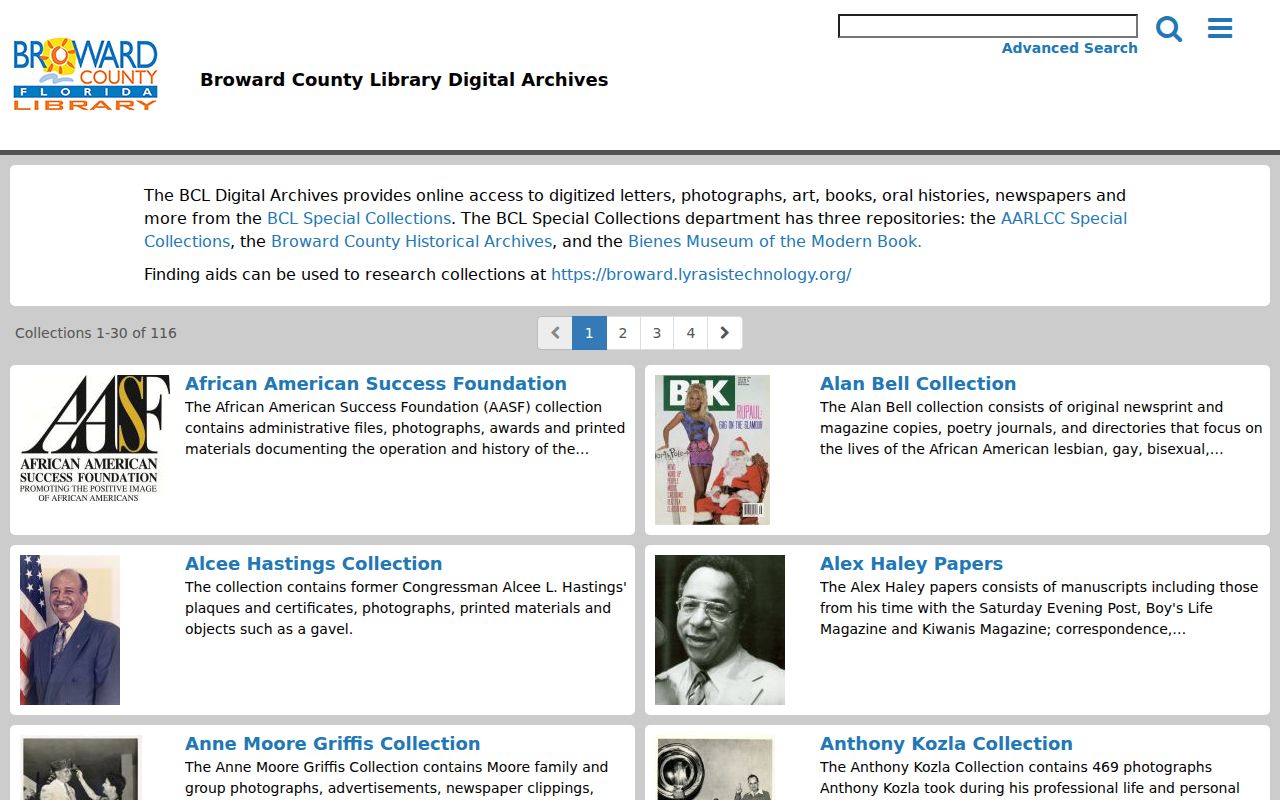
Search exact names, alternate spellings, streets, schools, and neighborhoods, then cite the item record rather than only the search screen.
Bennett school materials span roughly 1926 to 1963. Bryan, Chapman, Letson, Rodes, and other family collections preserve photos, certificates, and clippings. Oral-history memories reach the 1890s, while photographs of the 1926 hurricane and 1947 flood can explain changes in a building or block without implying that county records were destroyed.
Florida City Directory Holdings
The State Library city-directory collection is arranged first by city and then by year. Its Florida Collection spans the early 1900s to the present at the statewide level. Search the holdings for Fort Lauderdale before traveling to Tallahassee, and contact reference staff at 850-245-6682 when the catalog does not resolve an edition.
The successful State Library capture below shows the official path into Florida directory holdings.
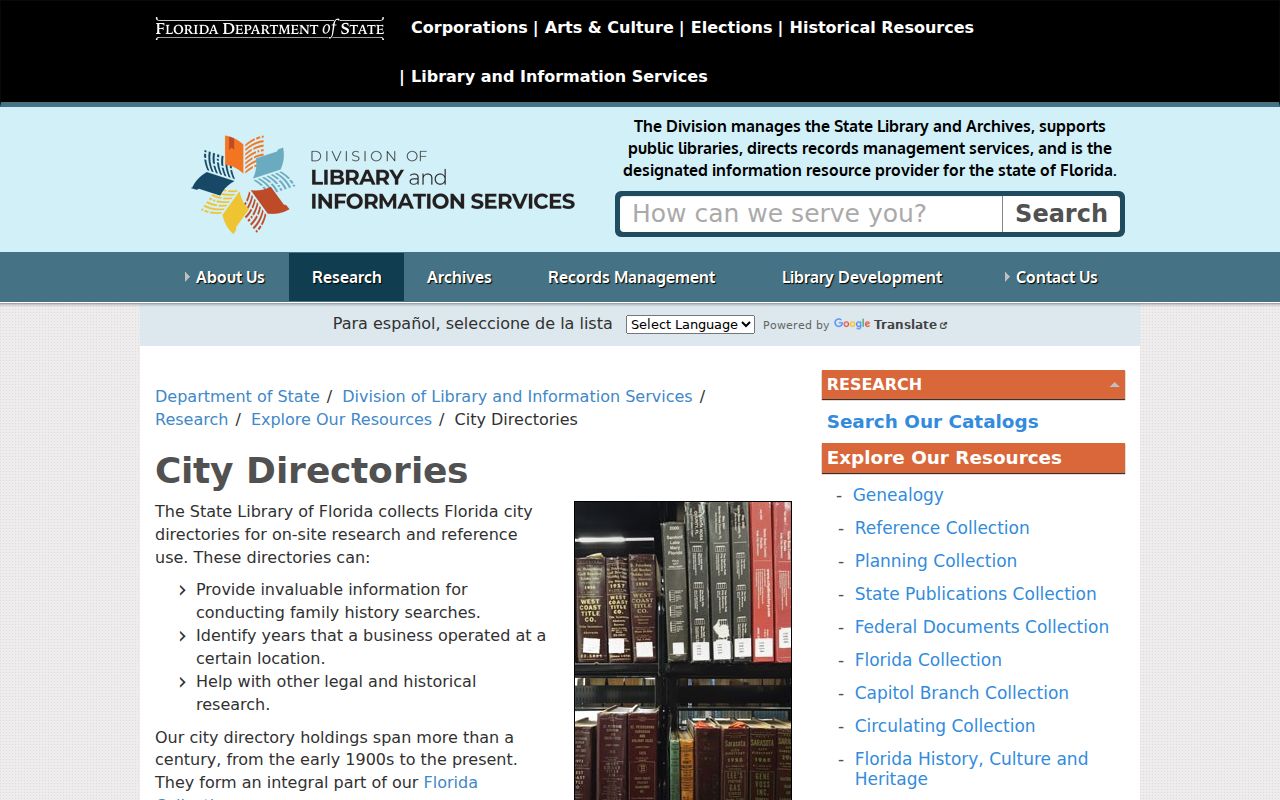
The result should be treated as a shelf locator. Record its call information and confirm whether access is onsite, copied by staff, or available through another repository.
Florida Memory adds state and county records rather than a continuous city-directory run. Its Broward officials index covers 1915 through 1969 and records names, offices, post-office addresses, appointment dates, and remarks. This is a focused directory of public officials and a useful clue for the county's administrative history.
Read Fort Lauderdale Directory Entries
Read only what the edition actually prints. In the verified telephone books, an alphabetical entry commonly provides the listed name, street address, and telephone exchange or number. A conventional Polk entry may add a spouse, occupation, employer, and status marks, but those fields must be confirmed against the key in that Fort Lauderdale volume. Never import a symbol from another city or year.
| Listed name | Subscriber or organization in a telephone book; a conventional directory may identify a householder. |
|---|---|
| Spouse | Often appears in parentheses in a Polk-style entry, when that edition uses the convention. |
| Occupation | May name a trade or employer in a conventional directory; usually less detailed in a phone book. |
| Street address | Connects the listing to a house number, subject to old spelling and numbering. |
| Telephone | Exchange and number in the verified 1941 to 1947 telephone run. |
| Status mark | Possible marks include h for householder, r for rooms, or wid for widow, only when the edition key confirms them. |
- Criss-cross directory
- A section ordered by street and house number, useful when the address is known but the person's name is not.
- Householder index
- An address-oriented list of the named adult or subscriber associated with a dwelling.
- Abbreviation key
- The edition's own legend for status, street, occupation, and other shortened terms.
A directory entry is evidence of a listing, not proof of every member of the home. Preserve the image number or page, edition date, and exact text.
Reverse Fort Lauderdale Directory Searches
A criss-cross section starts with the street. Find the street heading, move to the house number, and transcribe the listed adult or subscriber. This method is well suited to a house-history question and can reveal nearby listings in one pass. Yet not every edition has a reverse section, and telephone directories omit unlisted customers.
For modern parcel and deed evidence keyed by address, shift to the Fort Lauderdale street directory workflow. Historical directory work should stay focused on the shelf: which edition contains the address, how the name is rendered, and whether the next available year repeats or changes it.
Waterways, barrier islands, and old development patterns make Fort Lauderdale address work uneven. Early core areas such as Sailboat Bend, Colee Hammock, Tarpon River, and Rio Vista often reward directories and Sanborn maps. Later subdivisions may be stronger in mid-century phone books and plats.
Fill Fort Lauderdale Directory Gaps
A directory can leave out a person, an edition, or a whole community. The African-American Research Library and Cultural Center at 2650 Sistrunk Boulevard holds Special Collections for African and African-American Broward history. Its phone is 954-357-6282. Historical Black Newspapers can help recover names and addresses that mainstream shelves missed.
School yearbooks, the Bennett Collection, church material, family papers, and local newspapers can place the same name in a Fort Lauderdale setting. Digital Sanborn Maps add a building footprint, material, and use to a street address. Public census schedules through 1950 add relationships, age, birthplace, and occupation, subject to the federal 72-year release rule.
The first Broward county records date from its 1915 creation. Earlier Fort Lauderdale-area research may lead into Dade or Palm Beach predecessor record groups. That archival boundary is more reliable than assuming that a local gap means no record survives.
History Fort Lauderdale Collections
History Fort Lauderdale supplies a second local museum and archival route. Its holdings can add photographs, manuscripts, and site history when a directory yields only a terse line. Contact the archive with the full name, address, estimated dates, and the directory citation already found.
The successful source capture below shows the museum and archive entry point.
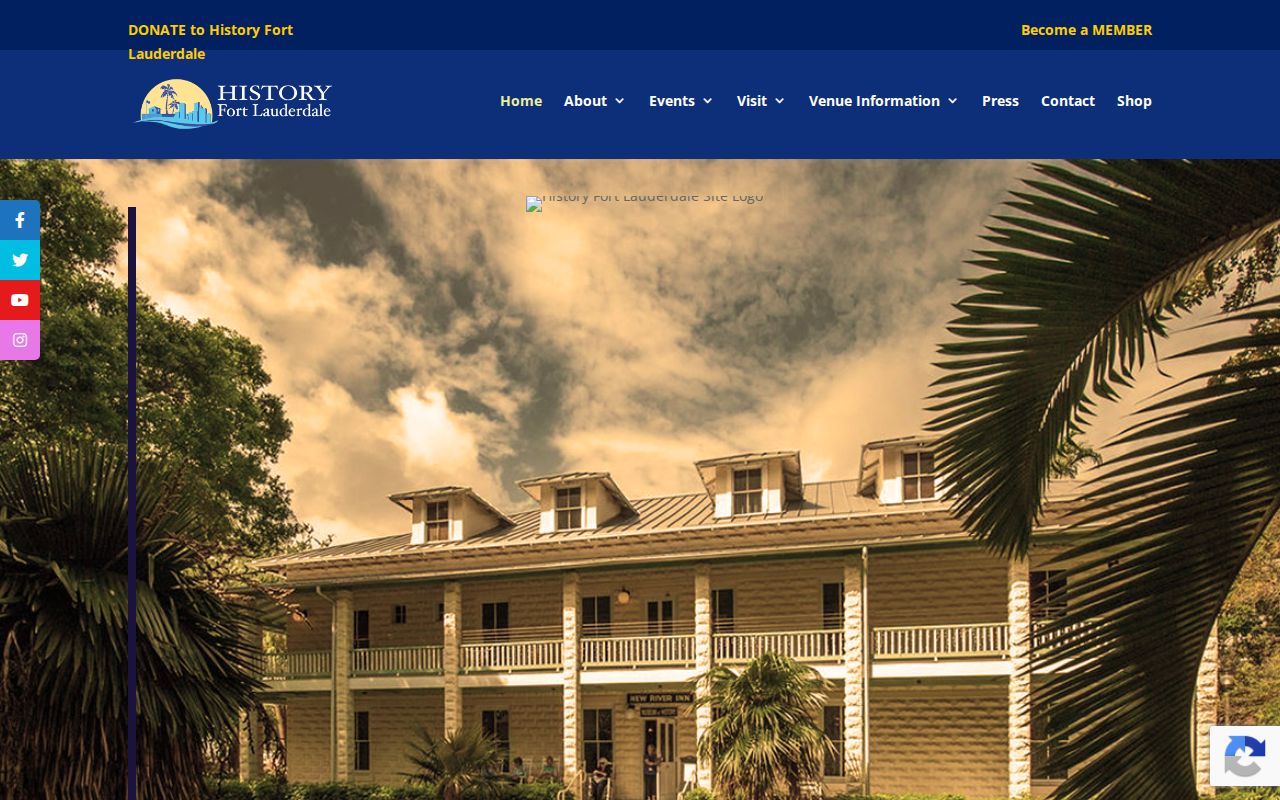
A focused request gives staff a better chance to match the listing with a family file, image, oral history, or neighborhood record.
Other specialized repositories can help. Stonewall National Museum, Archives and Library and BCL's Alan Bell Collection preserve LGBTQ+ periodicals and community evidence. Collection descriptions and privacy limits should guide any use of personal material.
Trace Fort Lauderdale Family History
Annual or near-annual editions can bridge the long gap between census releases. Work slowly and preserve each citation. Similar names are common, and a changed initial or spelling can hide the same person. South Florida research also benefits from testing double surnames, hyphens, married or former names, initials, and older systems that stripped diacritics.
- Choose the earliest verified Fort Lauderdale directory or telephone issue near the known date. Read its abbreviation page first.
- Find the surname and save the full entry, page, edition, spouse, address, telephone, and any confirmed mark.
- Compare the next available year. Track address and name changes without treating a missing listing as proof of a move.
- Pair evidence near 1940 with the 1940 census and the 1941 to 1947 phone run. Use the 1950 census for the late-1940s bridge.
- Test the address in a reverse section, Sanborn map, newspaper, yearbook, deed, probate file, or obituary index.
A disappearance has several possible causes: death, relocation, an unlisted telephone, nonrenewal, or simple omission. A death or move needs its own dated evidence. The volume is strongest when it narrows a time and place for that second search.
Fort Lauderdale Directory Timeline
The verified chronology is short but useful. It separates the county's institutional start, the national digital phone-book run, and the census releases that support household research. No verified last printed city-directory year was found.
| 1915 | Broward County was created, and Fort Lauderdale became the county seat. |
|---|---|
| 1926 to 1963 | Bennett school materials preserve books, photos, postcards, and records across a key growth era. |
| 1941 to 1947 | The Library of Congress Fort Lauderdale telephone-book item supplies 884 digitized images. |
| 1950 schedules | The latest public federal census available in 2026 can confirm household relationships near the phone-book run. |
| Present access | Main Library, State Library, Digital Archives, and History Fort Lauderdale provide complementary routes. |
That timeline avoids two common errors: treating broad statewide holdings as a complete local run, and treating the absence of an online edition as proof that no copy exists.